3 Anchor Videos — Ready to Film
Each video below is production-ready. Scripts written, thumbnails generated, CTA cards designed. Film these in order, publish to TikTok first, then Instagram Reels. Same visual identity across all three.
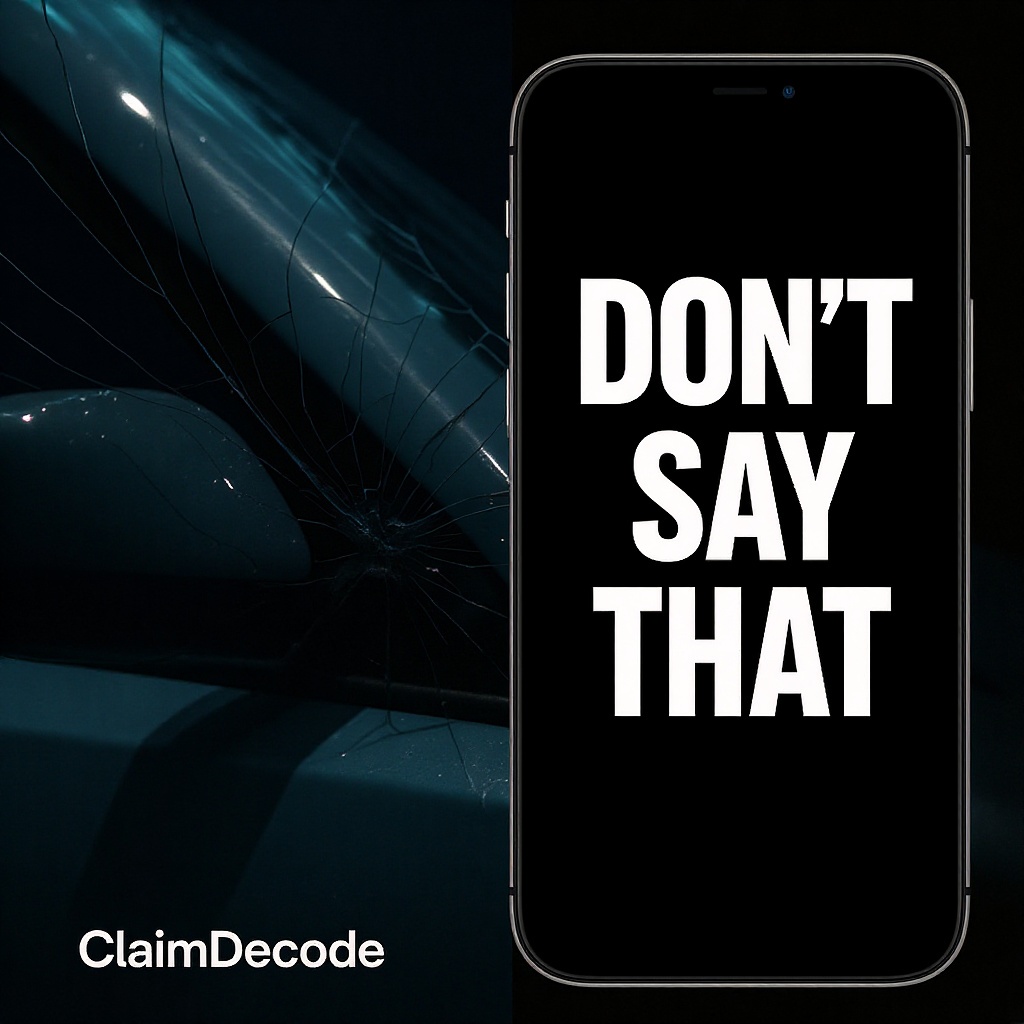 Video 1 · Evergreen
45–55s
Video 1 · Evergreen
45–55s
"What NOT to say after a car accident"
⏱ HOOK — First 3 seconds
"Stop. Before you say another word to that insurance adjuster — you need to hear this."
🎬 BODY — 30–40 seconds
"Three things you should never say after a car accident. Number one: 'I'm sorry.' Even if it's not your fault. Those two words can be used against you in a claim. Number two: 'I feel fine.' Adrenaline hides injuries. You could be hurt and not know it for days. Number three: 'I don't know.' When they ask how fast you were going — if you say 'I don't know' — they will fill in a number that makes you look bad. Know your rights before you say anything."
📣 CTA CARD — Last 8 seconds
Save this. Follow ClaimDecode for more insurance secrets they don't teach you.
🎥 Filming Notes
- Shoot with phone vertical (9:16), good lighting from front
- No teleprompter — memorize the 3 points, speak naturally
- Point at camera for emphasis on "stop", "sorry", "feel fine"
- End on direct eye contact before cutting to CTA card
- CTA card overlay: white text on dark green, ClaimDecode logo
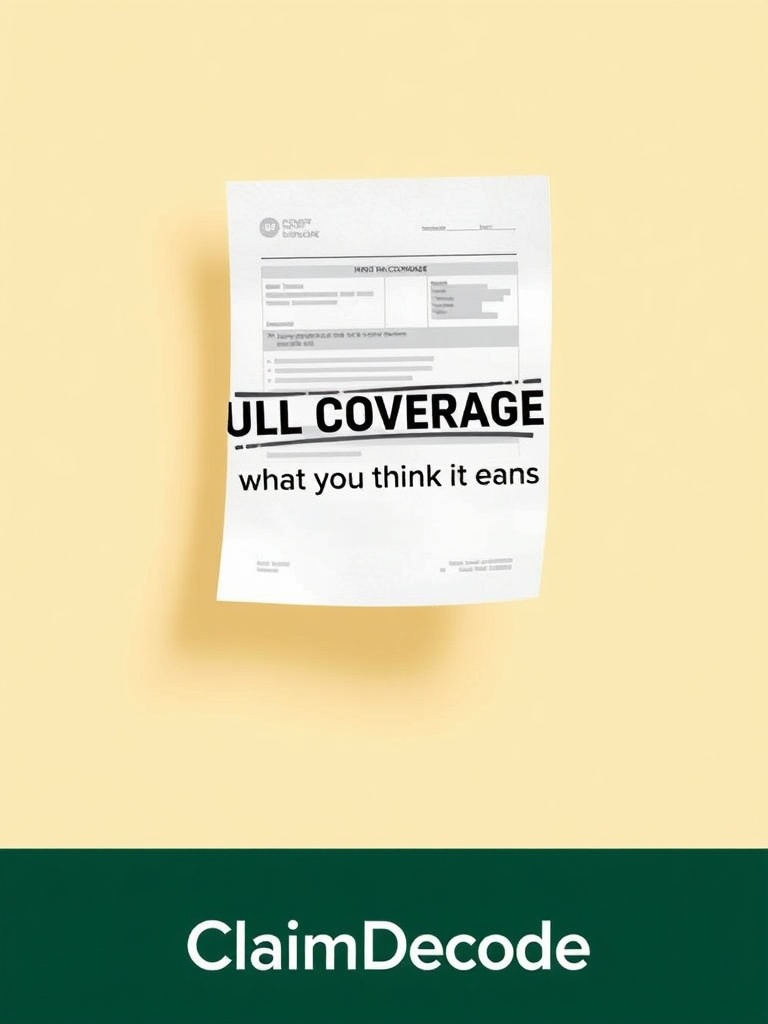 Video 2 · Clarity
40–50s
Video 2 · Clarity
40–50s
"What full coverage actually means — and doesn't"
⏱ HOOK — First 3 seconds
"Full coverage is a myth. Here's what it actually covers — and what it leaves out."
🎬 BODY — 30–40 seconds
"Your agent says 'you're fully covered' — but what does that actually mean? Full coverage is two separate policies: liability and comprehensive/collision. Liability pays for damage YOU cause to others. It does NOT fix YOUR car. Comprehensive covers theft, fire, falling objects. Collision covers crashes. But — there's usually a deductible. And if you're in an at-fault accident, your rates go up. And here's the part they don't tell you: if someone hits you and they have minimum coverage — your 'full coverage' may be the only thing paying your bills. Know what's actually in your policy."
📣 CTA CARD — Last 8 seconds
Follow ClaimDecode — get your policy explained before you need it.
🎥 Filming Notes
- Shoot vertical. Slightly slower, calmer delivery than Video 1
- Use hand gestures to break up the policy explanation (not static talking head)
- Hold up two fingers for the "two policies" moment — visual anchor
- Direct eye contact on "myth", "here's the part they don't tell you"
- CTA card overlay: cream background, dark green text, ClaimDecode logo
 Video 3 · Secrets
50–60s
Video 3 · Secrets
50–60s
"3 ways insurance companies save money off your claim"
⏱ HOOK — First 3 seconds
"Your insurance company has a playbook — and you don't know the rules. Here are three ways they save money on YOUR claim."
🎬 BODY — 35–45 seconds
"Number one: the替你 — they send an adjuster to lowball you right after an accident. They're friendly, they seem helpful, and they offer you a settlement that sounds decent. But it's almost always way less than your claim is worth. Never accept a first offer. Number two: they ask for a recorded statement and they use everything you say against you. Anything you say can be twisted. You don't have to give one. Number three: they delay. The longer a claim stays open, the more likely you get frustrated and accept less. They bank on you giving up. Don't. Know your rights. Know your policy. Know what you're owed."
📣 CTA CARD — Last 8 seconds
Follow ClaimDecode — learn how to fight back against claim lowballing.
🎥 Filming Notes
- Shoot vertical. Slightly lower energy than the first two — this one is "telling secrets"
- Lean slightly toward camera on "lowball", "delayed", "give up" — conspiratorial tone
- Hold up fingers for the three numbers, keep them on screen 3-4 seconds each
- End with firm, direct delivery on "what you're owed"
- CTA card overlay: dark green background, gold/amber text, ClaimDecode logo
📤 Publishing Guide
TikTok
- Open TikTok app → tap + (center bottom)
- Upload the video file (film and save to camera roll first)
- Caption: "3 things you should never say after a car accident 🛑 #insurance #caraccident #claimdecode"
- Add hashtag pack:
#insurance #caraccident #claims #autocoverage #fullcoverage - Tag @claimdecode if account exists
- Post at 7pm or 8pm for best reach
Instagram Reels
- Open Instagram → tap + → select Reels
- Upload video from camera roll
- Caption: "3 things you should never say after a car accident. Save this before you need it. 🛑 Full video link in bio"
- Add hashtag pack:
#insurance #caraccident #insuranceclaim #fullcoverage - Add CTA to bio link:
linkinbio.com/claimdecode - Post same day as TikTok, 30 min after